
Kickstarting Your DevSecOps Career - The 4 Essential Certifications You Need
4 Must-Have Certifications to Ignite your DevSecOps Career

Table of Contents
- Introduction
- 1. CompTIA Security+
- 2. CompTIA Linux+
- 3. AWS Certified Developer - Associate
- 4. Certified Kubernetes Administrator (CKA)
Introduction
In this blog post, I'll be unpacking the four certifications that I firmly believe are pivotal for anyone aspiring to launch a career in DevSecOps. Drawing from my journey, research, and insights gathered along the way, this post aims to equip you with the knowledge to choose certifications that will not only give you a competitive edge but also a solid foundation in the complex world of DevSecOps.
1. CompTIA Security+
Starting with what I consider the bedrock of cybersecurity, the CompTIA Security+ certification is your gateway into understanding the intricate world of cyber security, which is indispensable in the DevSecOps realm.
Why It Matters
The CompTIA Security+ is an entry-level certification but don't underestimate its value. It comprehensively covers the fundamentals of cybersecurity, from threats and vulnerabilities to risk management protocols. It equipped me with a solid grasp of security concepts, which has been instrumental in navigating the 'Sec' in DevSecOps.
What You'll Learn
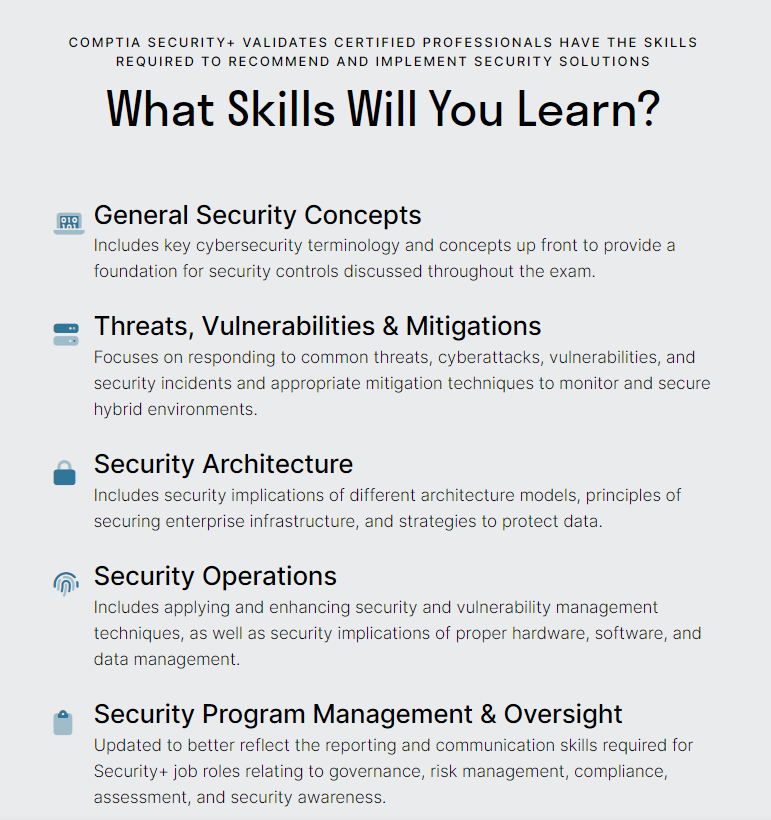
This certification dives deeply into general security concepts and teaches you about different cyber threats and how to mitigate them. In addition, it covers security operations and architecture and delves into vulnerability management techniques and gives insights into security program management.
Certification Details
- Question Format: Mix of multiple choice and performance-based questions.
- Exam Length: 90 minutes.
- Passing Score: Minimum of 750 out of 900.
- Validity: 3 years, with an option to renew through continuing education credits.
- Cost: $404 USD.
NOTE: This can change, so make sure you reference the original link for this exam here: Certification Details - CompTIA Security+
2. CompTIA Linux+
For those looking to solidify their command over Linux distributions, which is a critical skill for any aspiring DevSecOps professional, the CompTIA Linux+ is a non-negotiable!
Why It Matters
Linux powers a significant portion of the servers running in data centers worldwide and mastering it can set you apart as a DevSecOps engineer. Although I do not have this certification myself, it will teach you (based on my research) the ins and outs of Linux administration, from managing software and services to scripting and security, which is vital for your success as a DevSecOps engineer.
What You'll Learn
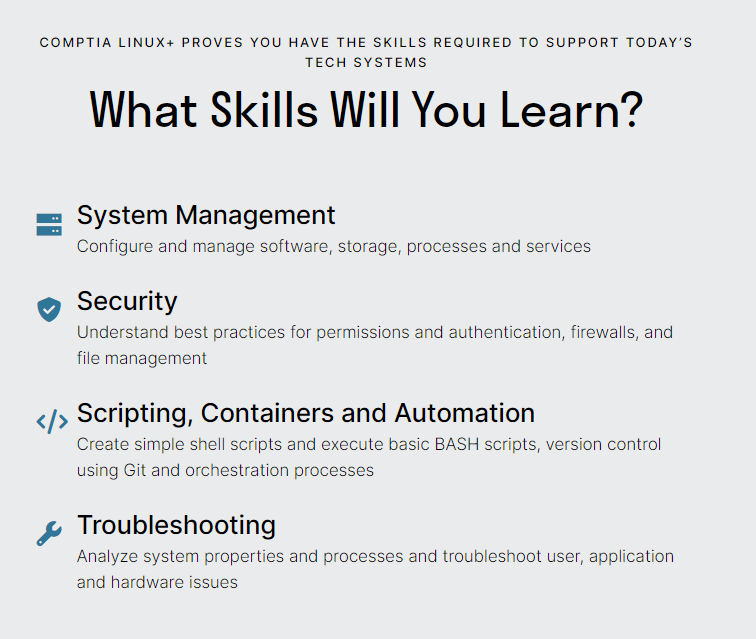
With this certification, you should expect to get hands-on with system management, security practices for permissions and authentications, and have a foray into scripting, containers, and automation. This certificate emphasizes troubleshooting, which is a non-negotiable skill in a real-world DevSecOps environment.
Certification Details
- Question Format: Multiple choice and performance-based.
- Exam Length: 90 minutes.
- Passing Score: 720 or higher.
- Validity: 3 years, with renewal options.
- Cost: $369 USD.
NOTE: This can change, so make sure you reference the original link for this exam here: Certification Details - CompTIA Linux+
3. AWS Certified Developer - Associate
Considering the ubiquity of AWS in cloud services, the AWS Certified Developer - Associate certification is a goldmine for those looking to demonstrate their proficiency in developing and managing AWS-based applications for real-world DevSecOps use cases.
Why It Matters
This certification provides a detailed understanding of AWS services, essential for deploying infrastructure and managing CI/CD pipelines, which is a core component of the DevSecOps workflow.
What You'll Learn
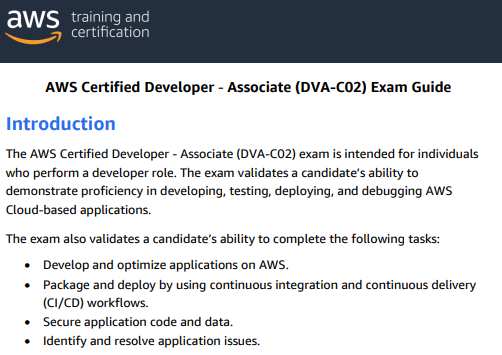
For this certification, you should expect to learn how to deploy applications and infrastructure using AWS CloudFormation, master AWS CI/CD services (CodeCommit, CodeDeploy, CodePipeline, etc.), and get comfortable with AWS coding standards for security. To learn more about this exam and all that it entails, you can take a look at the exam guide here: Developer Associate Exam Guide
Certification Details
- Exam Length: 130 minutes.
- Cost: $150 USD.
- Question Format: Multiple choice and multiple response questions.
- Validity: 3 years, must retake exam again to renew
NOTE: This can change, so make sure you reference the original link for this exam here: Certification Details - Developer Associate
4. Certified Kubernetes Administrator (CKA)
With containerization being a critical part of DevSecOps, understanding Kubernetes is non-negotiable. The Certified Kubernetes Administrator certification is designed to ensure you can handle the challenges of managing Kubernetes environments.
Why It Matters
Kubernetes is at the forefront of container orchestration. Like the CompTIA Linux+, I did not take this exam. However, I believe that this certification proves your prowess in managing production-grade Kubernetes clusters, which is a must-have skill for any DevSecOps professional.
What You'll Learn
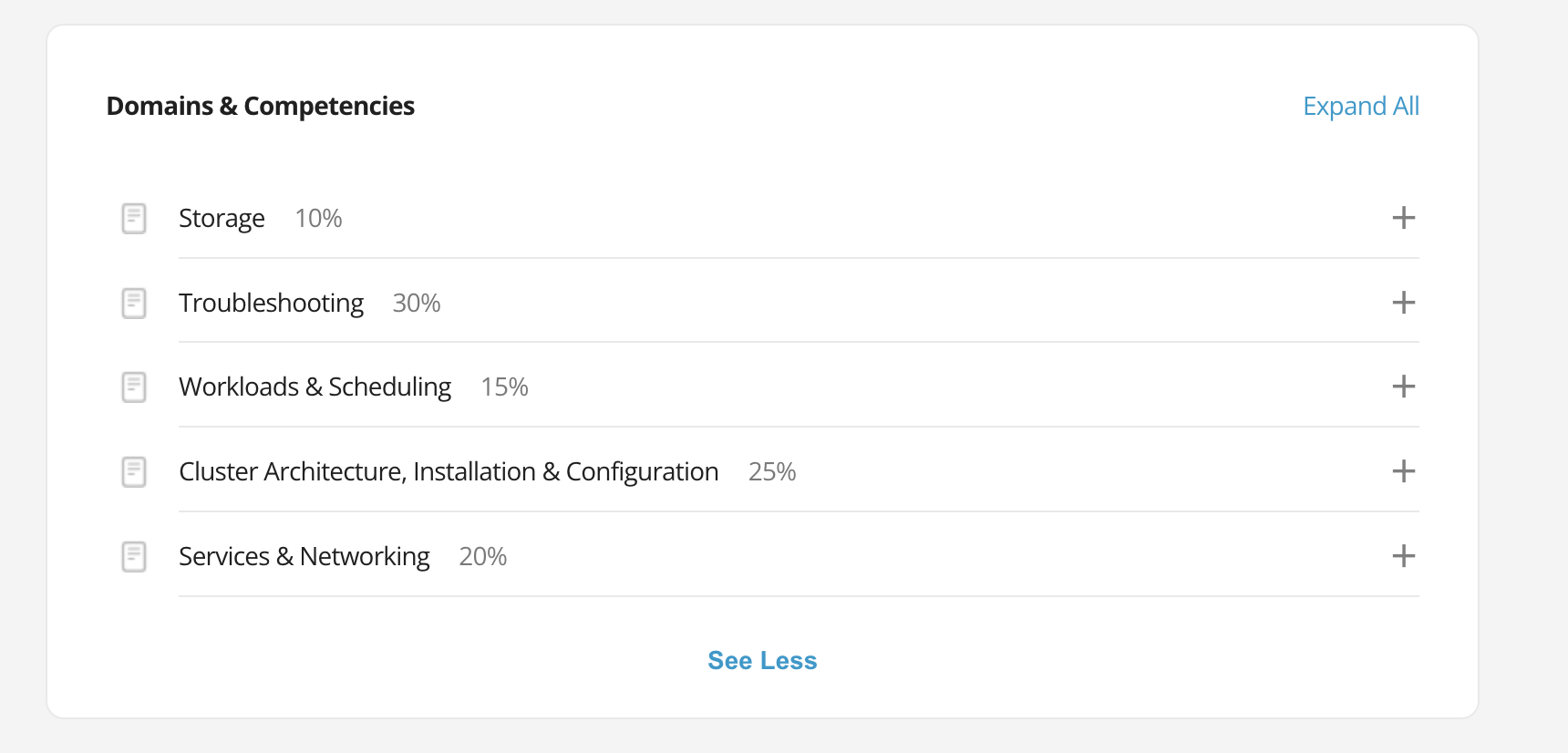
From basic installation and configuration to managing cluster operations and understanding Kubernetes networking, this certification covers it all. It's an intensive dive into what makes Kubernetes tick and how to keep it running smoothly.
Certification Details
- Exam Cost: $395 USD.
- Validity: 3 years.
- Exam Format: Performance-based, including real-time tasks in a simulated environment.
- Duration: 2 hours.
NOTE: This can change, so make sure you reference the original link for this exam here: Certification Details - CKA
Conclusion
While these certifications are crucial stepping stones in your DevSecOps journey, I want you all to remember this:
Certifications are just part of the puzzle. The real game-changer is the hands-on experience you gain through lab work and projects.
Incorporate what you learn into tangible projects and showcase them in your portfolio. This not only elevates your understanding of the materials and technologies, but it significantly boosts your employability.
As always, thank you so much for reading! If you found this post helpful at all, please share it with your friends. If you've got any other certifications in mind that you think are essential for obtaining a career in DevSecOps, please leave a comment below and let me know your thoughts. I'd love to spark more discussion around which certifications you think are important for aspiring DevSecOps engineers.
Until next time, keep learning, keep growing, and never stop exploring the vast universe of DevSecOps. Let's pave the way for a more secure, efficient, and effective IT landscape together.
Disclaimer: This blog post reflects my personal experiences and opinions.
This blogs original content is based off of the following YouTube Video: